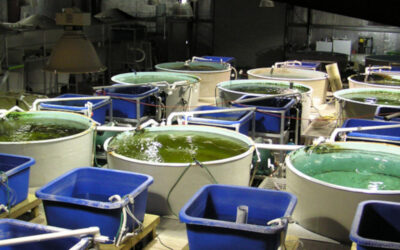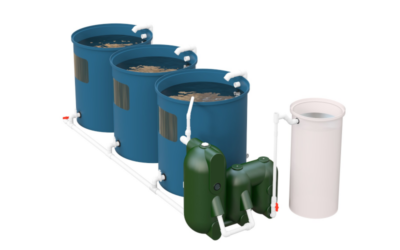
Marine recirculating aquaculture systems need to move water, capture solids, support nitrification, add oxygen, and strip carbon dioxide. Pairing a low-head PolyGeyser bead filter with an airlift pump can combine those jobs into a compact, low-water-loss treatment...
Aquatic Systems Educational Articles
Linear vs. Monod Modeling for Ammonia Oxidation in Low-TAN RAS
In low-TAN marine hatchery, broodstock, and fingerling systems, peak biofilter capacity is not always the most important design question. A simple linear model, calibrated only in the low-ammonia range, can be a more stable and practical way to estimate ammonia...
Floating Bead Filters for Warmwater Recirculating Aquaculture Systems
Floating bead filters can simplify recirculating aquaculture system design by combining two jobs - solids clarification and biological nitrification - in one expandable granular media filter. Estimated read time: 10 minutes | Audience: aquaculture operators, hatchery...
Biofiltration in Aquaculture: How Biological Filters Support Cleaner, More Efficient Fish Farming
As aquaculture becomes more intensive, farms need reliable ways to protect water quality, reduce water use, and manage waste. Biological filtration is one of the core technologies that makes recirculating aquaculture systems possible. Estimated read time: 8 minutes |...
Biofilm Development and Biofilter Acclimation
Effective biofiltration depends on the development of a biofilm layer on the filter media. In bead-based biofilters, bacteria attach to the media surface and carry out the biochemical processes that are essential for purifying recycled water. When a biofilter is first...
Acclimating the Biofilter to Increased Loading
Once a biofilter is initially acclimated, it contains the right types of bacteria. The next step is to ensure there are enough bacteria to handle the ammonia produced by the animals in the system. This is done by gradually increasing animal density in moderate steps,...
Heterotrophic and Nitrifying Bacteria in Aquaculture Fixed-Film Biofilters
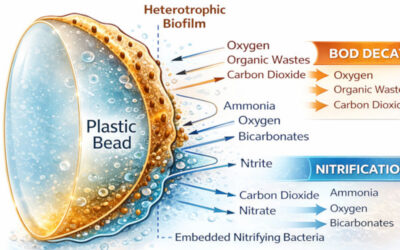
Figure 1 - The bacterial film that coats each bead contains the nitrifying bacterial population. Heterotrophic bacteria also form a thin biofilm layer on each bead. The nitrifying bacteria compete with the heterotrophic bacteria for space. Aerobic fixed-film...
Managing Biofilm for Optimal Nitrification
Once favorable water quality is established, the rate of nitrification in a biofilter is largely determined by the amount of nitrifying bacteria present in the biofilm. In bead filters, the biofilm is often dominated by heterotrophic bacteria, which grow quickly on...