
Propeller Bead® Filter
Aggressive bead filtration for high-solids aquatic systems
A compact, energy-conscious bead filter built for aquaculture, hatcheries, RAS, zoos, aquariums, lobster holding, aquaponics, and large pond systems.
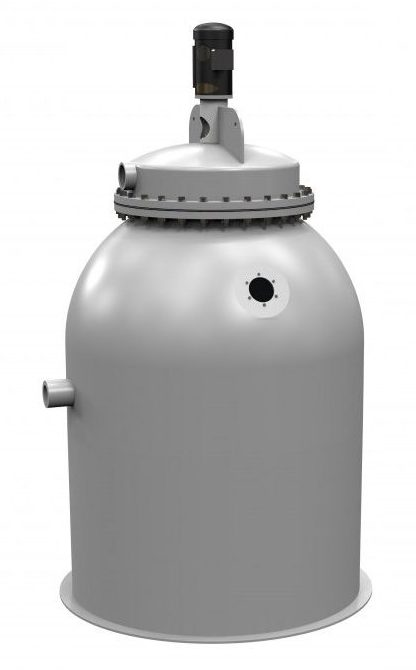
The Propeller Bead® Filter combines solids capture, biological filtration, and a powerful motorized backwash system to clean floating bead media under demanding loading conditions while reducing backwash water loss compared with conventional sand filtration.
~10%
of the water normally lost with typical sand-filter backwashing.
Aggressive motorized backwash
The embedded propeller vigorously mixes the bead bed to break loose heavy solids and excess biofloc.
Built for high-solids systems
A strong fit for high feed rates, animal ponds, hatcheries, aquaculture, and applications with changing solids loads.
Low-head, efficient operation
Bead filtration supports efficient system design and can help reduce unnecessary pump horsepower.
Mechanical + biological filtration
Floating bead media captures suspended solids while supporting biofilm for biological filtration.
Aquatic Applications
Designed for facilities with real solids loads
The Propeller Bead® Filter is the workhorse option for aquatic systems that need robust solids capture, reliable biofiltration support, and a deeper media cleaning cycle.
Low-Head Design
Move water efficiently with low-head filtration
Aquatic systems run continuously. The right filter should help the whole system move water efficiently, not force operators into unnecessary pump horsepower. The Propeller Bead® Filter is built around low-head operation, smaller pump requirements, reduced water loss, and lower operating costs.
Aggressive propeller backwash keeps the media clean; low-head design keeps operating costs down.
High-resistance filtration
More head loss can mean higher pump horsepower and higher energy demand.
Low-head bead filtration
Lower resistance helps operators design around efficient circulation.

Bioclarification
Mechanical solids capture plus biofiltration support
During normal operation, water passes through the floating bead bed. Solids are captured in the media, while beneficial bacteria colonize the bead surface and help support biological filtration.
Mechanical filtration
Captures solids from feed, feces, algae, sediment, and exhibit debris.
Biological filtration
Supports biofilm for ammonia and nitrite management in aquatic systems.
How It Works
A simple operation sequence with powerful media cleaning
1
Filter
Water enters the unit and passes through the floating bead bed for solids capture and bioclarification.
2
Isolate
The pump is turned off and the inlet valve is closed before the backwash cycle begins.
3
Mix
The motorized propeller fluidizes the beads and separates captured solids from the media.
4
Settle
The mixing motor stops and solids settle into the internal settling zone.
5
Drain
Concentrated sludge is drained, valves are reset, and the filter returns to normal operation.
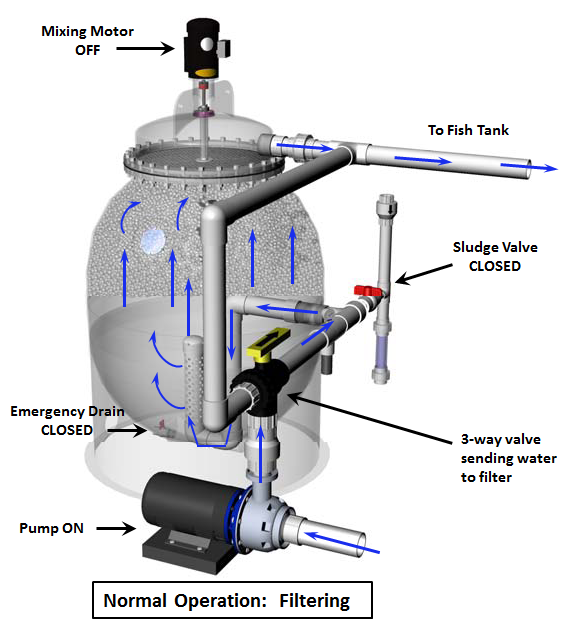
Normal operation
Water flows through the filter and floating bead media while the mixing motor remains off. Solids are trapped in the bead bed and clarified water returns to the aquatic system.
- Continuous filtration during normal operation
- Floating bead bed provides solids capture
- Biofilm on media supports biological filtration
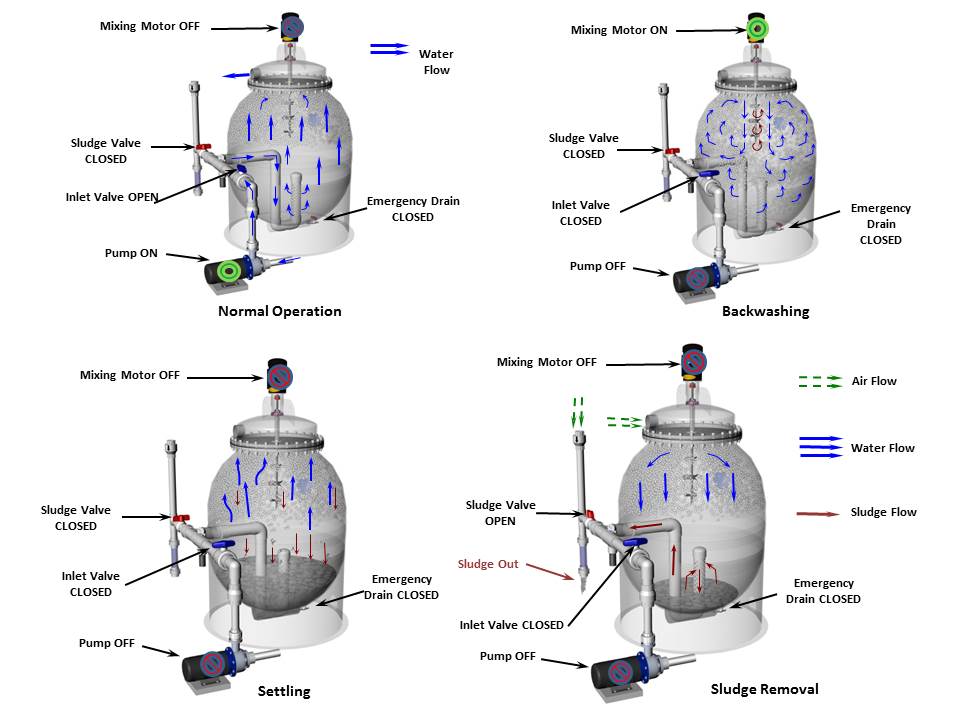
Backwash, settling, and sludge removal
During backwash the motorized propeller fluidizes the beads, released solids settle, and concentrated sludge is drained before filtration resumes.
- Motorized propeller cleans media
- Solids settle before drainage
- Backwash frequency depends on loading and feed rate
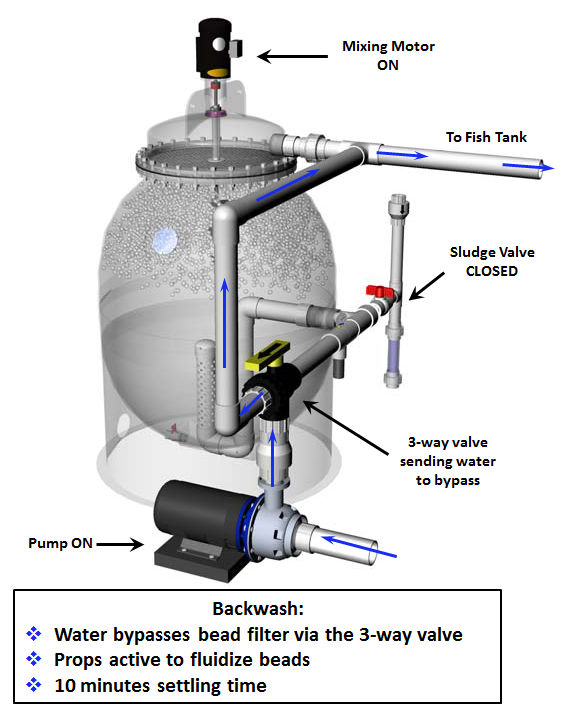
Bypass backwash
The system can be configured so water bypasses the bead filter while the propeller fluidizes the beads and releases solids. This helps operators clean the media without overcomplicating the process.
- Three-way valve sends water to bypass
- Propeller fluidizes beads
- Solids settle before removal
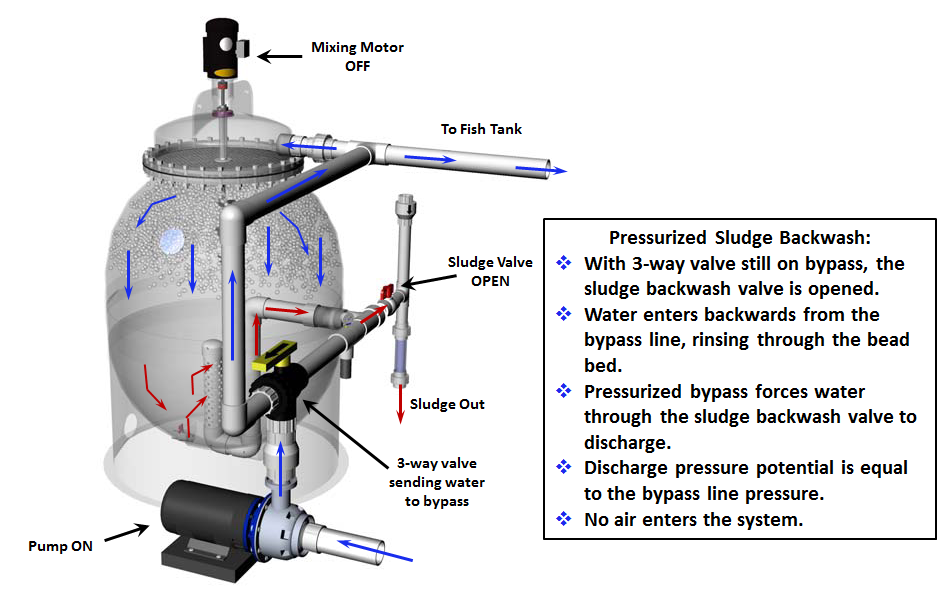
Pressurized sludge backwash
In pressurized backwash arrangements, the system can discharge concentrated sludge through the sludge backwash valve after the media has been agitated and solids have separated.
- Backwash design can be matched to site plumbing
- Solids are removed as concentrated sludge
- AST can help define the right valve and discharge arrangement
Model Selection
Standard and high-flow Propeller Bead® options
Standard PBF
For mechanical + biological filtration
Best when the filter is expected to provide both solids removal and biofiltration support.
| Model | Media | Max flow | Backwash water |
|---|---|---|---|
| PBF-3PE | 3 ft³ | 30 gpm | 5-10 gal |
| PBF-5 | 5 ft³ | 50 gpm | 5-10 gal |
| PBF-10 | 10 ft³ | 100 gpm | 10-30 gal |
| PBF-25 | 25 ft³ | 200 gpm | 30-60 gal |
| PBF-50 | 50 ft³ | 300 gpm | 50-150 gal |
| PBF-100 | 100 ft³ | 600 gpm | 100-200 gal |
High-Flow PBF-S
For high-flow solids removal
Best for large ponds, zoo pools, exhibits, and clarifier applications where biofiltration is handled elsewhere or lightly loaded.
| Model | Media | Max flow | Backwash water |
|---|---|---|---|
| PBF-3F | 3 ft³ | 75 gpm | 5-10 gal |
| PBF-5S | 5 ft³ | 100 gpm | 5-10 gal |
| PBF-10S | 10 ft³ | 200 gpm | 10-30 gal |
| PBF-25S | 25 ft³ | 300 gpm | 30-60 gal |
| PBF-50S | 50 ft³ | 600 gpm | 50-150 gal |
| PBF-100S | 100 ft³ | 1,200 gpm | 200-300 gal |
Skid Systems
Prefabricated packages for faster installation
For projects that need a more complete solution, Propeller Bead® skid systems can combine filtration, pumps, plumbing, unions, and optional UV sterilization in a ready-to-connect package.

Proof Points
Used across demanding aquatic installations
Zoo exhibit
Elephant and large mammal ponds
Propeller Bead® Filters have been used for large animal ponds and exhibit water systems with heavy solids loads.
Public aquarium
Sea lion and aviary systems
High-flow filtration examples include sea lion exhibits, aviaries, and quarantine systems.
Aquaponics
Disney Epcot exhibit
A PBF-10 has been featured in an aquaponics system with tilapia and lettuce production.
Hatchery
Oyster and shrimp hatcheries
PBF systems have been applied to mobile oyster hatchery filtration and shrimp hatchery applications.
Research
Saltwater reclamation
Research facilities have used PBF filters for high-solids saltwater filtration and reclamation.
Ponds
Large koi and greenhouse ponds
Multiple PBF models are used in large koi pond systems with high clarity expectations.
Engineering Support
Get the right PBF configuration for your system
Propeller Bead® sizing should be based on more than tank volume. The right model depends on solids load, biofiltration requirements, flow rate, turnover goals, available head, and how backwash discharge will be handled.
AST can help determine whether a standard PBF, high-flow PBF-S, skid system, or a combination with additional biofiltration is the best fit.
Information AST will ask for
- Flow rate
- System volume
- Available head
- Pump curve
- Species and biomass
- Feed rate
- Solids load
- TAN/ammonia load
- Freshwater or saltwater
- Heated or chilled water
- Backwash frequency
- Sludge discharge location
- UV, ozone, chiller, or pump integration
- Automation requirements
Resources
Technical resources for engineers and operators
FAQ
Questions operators ask before choosing a PBF
What makes the Propeller Bead® Filter different?
Its defining feature is the motorized embedded propeller, which aggressively mixes and cleans the bead bed during backwash. That makes it a strong choice for high-solids aquatic systems.
Is the Propeller Bead® Filter automatic?
The filter is easy to clean and can be configured with automation, but the core cleaning technology is a motorized backwash process rather than the fully pneumatic self-backwashing process used in PolyGeyser® filters.
Does it provide biological filtration?
Yes. Standard PBF models are intended for applications requiring both solids removal and biological water filtration. High-flow PBF-S models are better positioned as high-flow solids removal or clarification filters where biofiltration may be provided elsewhere.
Why does low head loss matter?
In aquatic systems, pumps often run continuously. Lower head loss helps reduce pump horsepower requirements and can lower long-term operating cost.
Is it a good fit for lobster holding?
Yes. Chilled saltwater systems benefit from stable water quality, low backwash water loss, and efficient circulation. A PBF can be part of a larger engineered lobster or seafood holding system.
Should I choose standard PBF or high-flow PBF-S?
Choose a standard PBF when the filter must provide both solids capture and biofiltration support. Choose a high-flow PBF-S when the main goal is high-flow solids removal or clarification, especially in zoo ponds, exhibit pools, and large systems with separate biofiltration.
Project gallery
Propeller Bead® Filter projects
Let's Discuss Your Project
From a simple filter to a complete custom system, our engineers can help you find the perfect filtration system for your needs. Get in touch today!