
Aquaculture Filters & Recirculating Aquaculture Systems
Aquaculture Filtration Technology Backed by 20+ Years of RAS Engineering
A recirculating aquaculture system is only as reliable as its filtration. Every component in the water treatment loop — solids removal, biofiltration, gas exchange, disinfection — has to perform consistently under heavy organic loads, day after day. When filtration falls short, water quality deteriorates, fish become stressed, and production suffers.
AST has spent over two decades engineering aquaculture filter systems for RAS operations around the world. Our bead filter technology combines mechanical and biological filtration in a single vessel, giving you a simpler, more reliable water treatment loop with fewer components to manage and fewer points of failure.
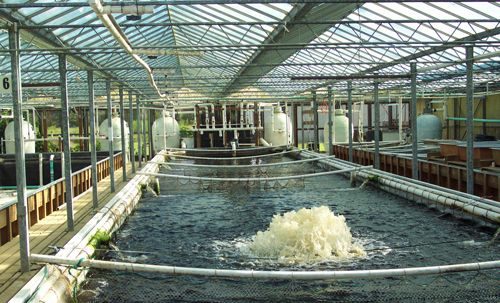
Large aquaculture facility utilizing multiple Propeller Bead Filters.
How Filtration Works in a Recirculating Aquaculture System
A recirculating aquaculture system continuously treats and reuses water rather than relying on a constant supply of fresh inflow. That makes the filtration system the most critical infrastructure in the facility — it’s what allows you to maintain safe ammonia, nitrite, and dissolved oxygen levels at commercial stocking densities.
In a typical RAS, water leaving the culture tanks passes through a series of treatment stages:
Solids removal captures uneaten feed, fecal matter, and other particulates before they break down and create additional biological oxygen demand. Biofiltration — often the most important and most complex stage — uses nitrifying bacteria to convert toxic ammonia into nitrite and then into relatively harmless nitrate. After that, degassing strips dissolved carbon dioxide, and disinfection (typically UV or ozone) reduces pathogen loads before clean water returns to the tanks.
Most recirculating aquaculture system designs require separate equipment for each of these stages. AST’s approach simplifies the two most demanding steps — solids capture and biofiltration — by handling both in a single bead filter unit. This reduces equipment footprint, cuts down on plumbing complexity, and gives you fewer systems to monitor and maintain.
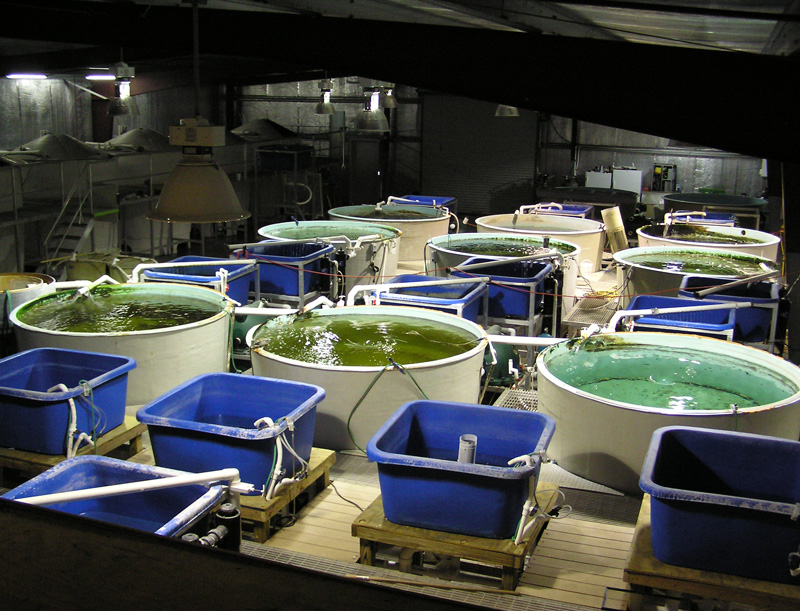
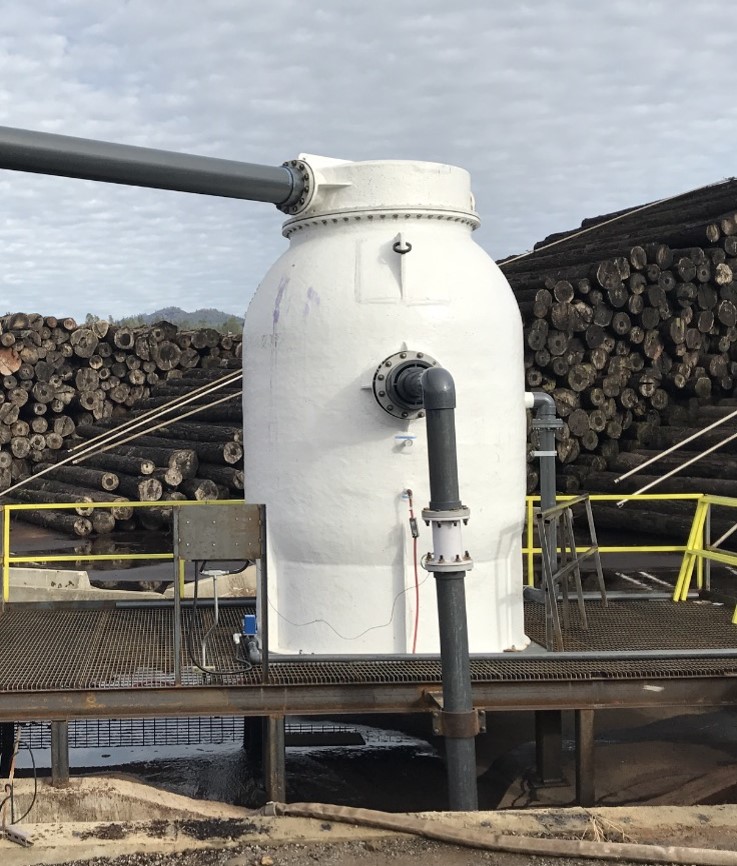
Red drum broodstock facility utilizing a PolyGeyser filter.
Why Bead Filtration for Aquaculture?
Not all aquaculture biofilter technologies are created equal. Trickling filters can clog and lose efficiency under heavy loads. Drum filters handle solids but contribute nothing to nitrification. Sand filters require frequent backwashing and can channel under high organic conditions. Each has a role, but each also has significant limitations in demanding RAS applications.
AST’s enhanced bead media was developed specifically for aquaculture filtration. The beads provide 400 ft² of surface area per cubic foot for bacterial colonization — enough to support robust nitrification even at the elevated ammonia levels common in dense grow-out and broodstock systems. At the same time, the media captures suspended solids down to fine particle sizes (100% of particles >50 microns, 48% in the 5–10 micron range per pass), delivering mechanical clarification that most standalone biofilters can’t match.
The result is a true dual-function aquaculture filter: one unit that handles both the biological and mechanical workload of your recirculating system.
AST Aquaculture Filter Systems at a Glance
PolyGeyser® Filters — Our flagship line features patented pneumatic backwash with no moving parts or electronics. Frequent, gentle backwash cycles keep the biofilm thin and active, optimizing nitrification rates while flushing captured solids. Backwash water is recycled internally, minimizing water loss. Available in standard and High Profile configurations for different flow and pressure requirements.
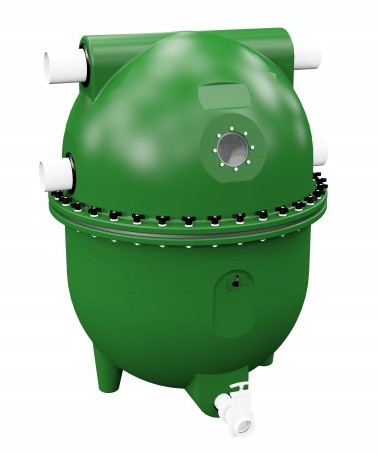
Endurance™ Filters — Compact, automated bead filters designed for smaller RAS installations or as supplemental filtration on larger systems. Ideal for pilot-scale aquaculture operations, quarantine systems, or research facilities.

Propeller Bead® Filters — Built for high-volume commercial operations, these filters use a motorized propeller for aggressive mechanical backwash while maintaining the biological performance of the bead media. Suited for large-scale recirculating aquaculture facilities with heavy feed loads.
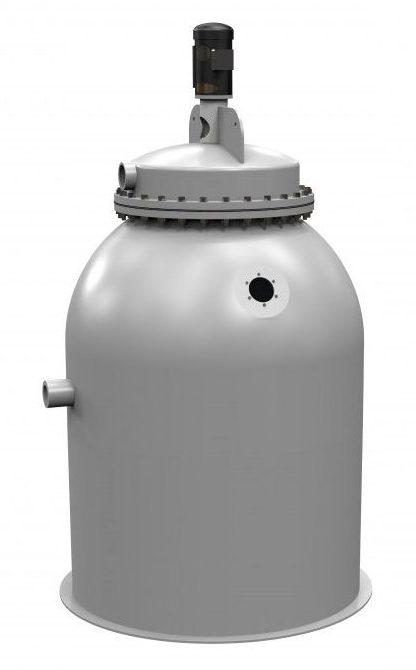
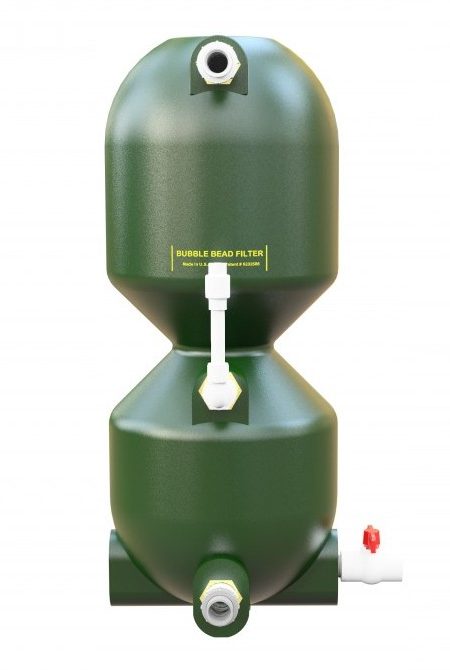
Bubble Bead® Filters — A proven, manually backwashed bead filter that remains a reliable workhorse for a wide range of aquaculture applications where simplicity and low upfront cost are priorities.
Are You Planning a Large Facility or Complex Aquaculture Project?
Find out today how we can build an aquaculture filter system that works for you!
Call: 800.939.3659 or
“[AST] Filters are simple, but very effective. They don’t have a lot of components, [but] handle solids and biofiltration very well.”
Justin Yost, Fisheries Biologist, South Carolina Department of Natural Resources
Used on broodstock tanks for replenishing natural waterways.
Aquaculture Projects
Why Buy an AST Bead Filter?
- Tested technology – over 20 years of research and real-world application have proven bead filtration superiority
- Energy savings – smaller pumps paired with efficient design
- Low maintenance – backwashing is quick and doesn’t require you to get your hands dirty
- Longevity – media never needs replacement and is resistant to clogging and channeling
- Excellent biofiltration – media contains 400ft2 of surface area per cubic foot for the biological breakdown of nitrogenous waste
- Superior clarification – studies show that our filters remove 100% of particles greater than 50 microns and 48% of particles in the 5-10 micron range per pass
- Water conserving technology – our newest filters recycle their own backwash water, drastically reducing water loss!
- One year warranty – if there is a defect in filter manufacturing AST will provide a warranty replacement for up to one year from the date of shipment
Let's Discuss Your Project
From a simple filter to a complete custom system, our engineers can help you find the perfect filtration system for your needs. Get in touch today!