

Figure 1 – The bacterial film that coats each bead contains the nitrifying bacterial population. Heterotrophic bacteria also form a thin biofilm layer on each bead. The nitrifying bacteria compete with the heterotrophic bacteria for space.
Aerobic fixed-film biofiltration is a biological treatment process in which microorganisms grow on a stationary media surface while wastewater flows past it. Over time, the media becomes coated with a thin biofilm of bacteria that extracts nutrients and contaminants from the wastewater as it passes through the filter bed (Figure 1: featured image above).
In recirculating aquaculture systems, two primary types of bacteria are present on aerobic fixed-film biofilters: heterotrophic and nitrifying bacteria (Table 3.3). These bacterial populations coexist within the biofilter, and understanding how they interact with each other—and how they influence overall filter performance—is critical to effective system design and operation.
Heterotrophic Bacteria
The classification of heterotrophic bacteria encompasses a great number of genera/species that share the common characteristics of extracting their nourishment from the breakdown (decay) of organic matter. Biochemical oxygen demand (BOD) is largely an indirect measure of the biodegradable organic material in water. Heterotrophic bacteria reduce BOD levels, consuming oxygen in the process. About 35-45 percent of the organic matter consumed is converted to bacterial biomass; whereas, the balance (55 percent) is converted to carbon dioxide, water, or ammonia. Heterotrophic bacteria grow very fast and are capable of doubling their population every ten to fifteen minutes. If the BOD in the water being treated is very high (> 20 mg -O2/l), the heterotrophs will quickly dominate the bead bed, overgrowing the slower growing nitrifying bacteria and consuming tremendous amounts of oxygen.
Nitrifying Bacteria
The second, yet more critical, classification of bacteria is the nitrifying bacteria. These bacteria are specialists, extracting energy for growth from the chemical conversion of ammonia to nitrite and from nitrite to nitrate (Figure 3.7). Nitrate is a stable end product, which, although a valuable nutrient for plants, displays little of the toxic impacts of ammonia and nitrite on many aquatic species. Composed principally of two genera (Nitrosomonas and Nitrobacter), nitrifying bacteria are very slow growing and sensitive to a wide variety of water quality factors. It is not surprising that most fix-film biofilters are managed to optimize conditions for nitrification. Additionally, it should be noted that nitrifying bacteria utilize inorganic carbon as energy source.
| Heterotrophic Bacteria | Nitrifying | |
|---|---|---|
| Function | Remove dissolved organics (BOD) from the water column; breakdown and decay organic sludges. | Convert toxic ammonia and nitrite to nitrate. |
| Reproductive Rate | Very fast (10 – 15 minutes) | Slow (12 – 36 hours) |
| Yield (mg biomass/mg waste consumed) | 0.35 – 0.45 | 0.05 – 0.10 |
| Media Adhesion | Poor | Good |
Table 1- In the Biofiltration Mode, Bead Filters Cultivate Two Types of Bacteria which Perform the Critical Biofiltration Function.
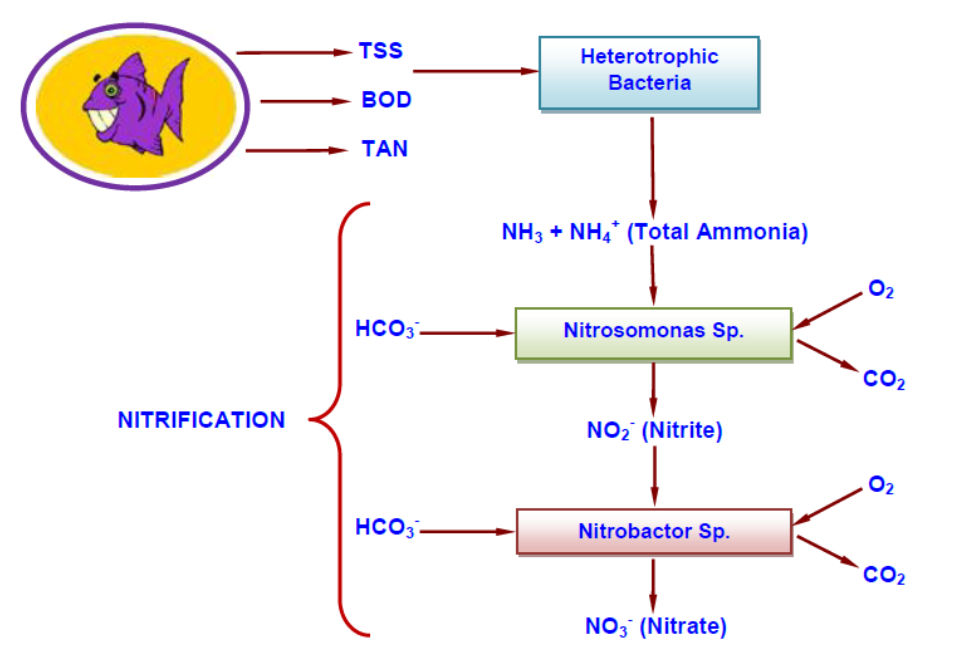
Figure 2- Two specialized types of nitrifying bacteria convert toxic Ammonia and Nitrite to the relatively safe Nitrate. Bicarbonate ions and oxygen are required in large amounts.